
Plywood and MDF are the two engineered panels most often specified for export furniture. They behave very differently in strength, moisture and finish, and the right choice for each part decides how well a product survives a long container journey.
On a drawing, a shelf is a shelf. In a container crossing the Pacific, the panel behind it matters: whether screws hold after reassembly, whether edges swell in humid air, whether a painted face stays flawless.
This guide compares plywood vs MDF for export furniture part by part, based on what we see every day on the production floor at our factory in Da Nang, Vietnam.
Key points
- Plywood: high strength for its weight, good screw holding, can be bent into curves.
- MDF: smooth, void-free surface that machines cleanly and takes paint well.
- Both panels must be sealed on every face and edge before shipping through humid climates.
- US orders need panels from CARB Phase 2 / TSCA Title VI certified mills.
Plywood: strength, screw holding and curves
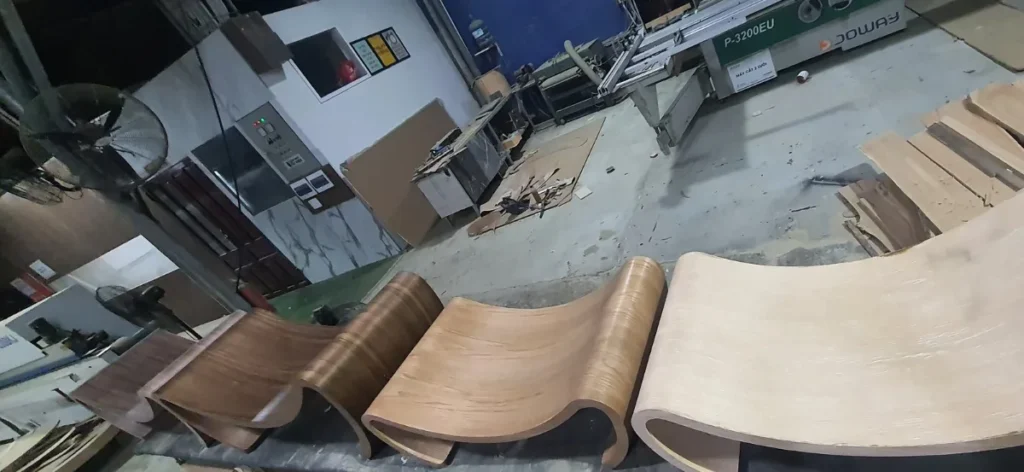
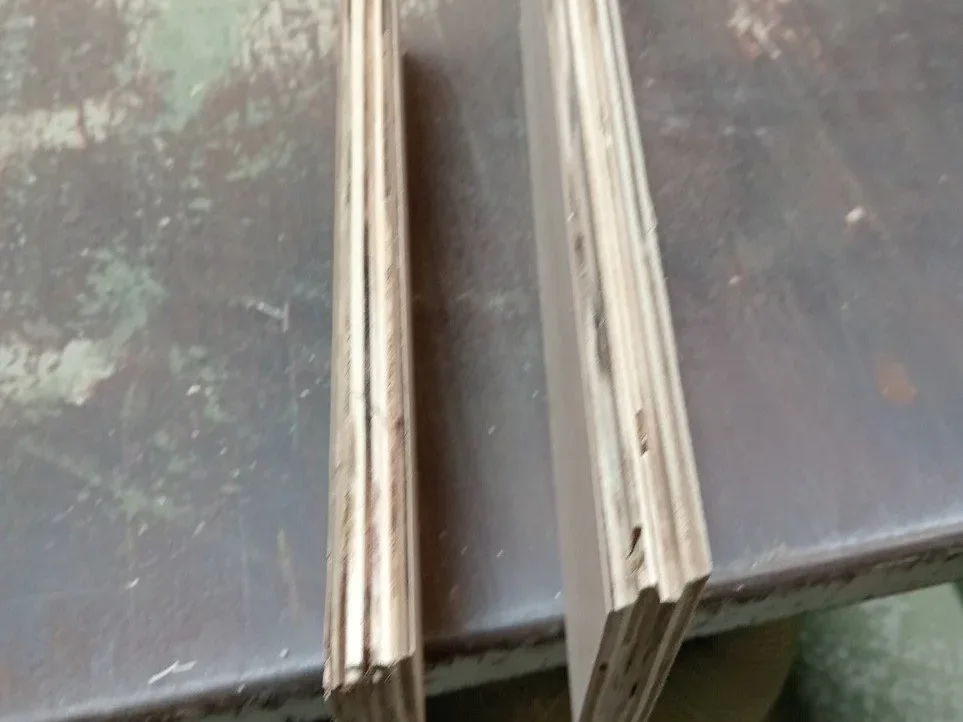
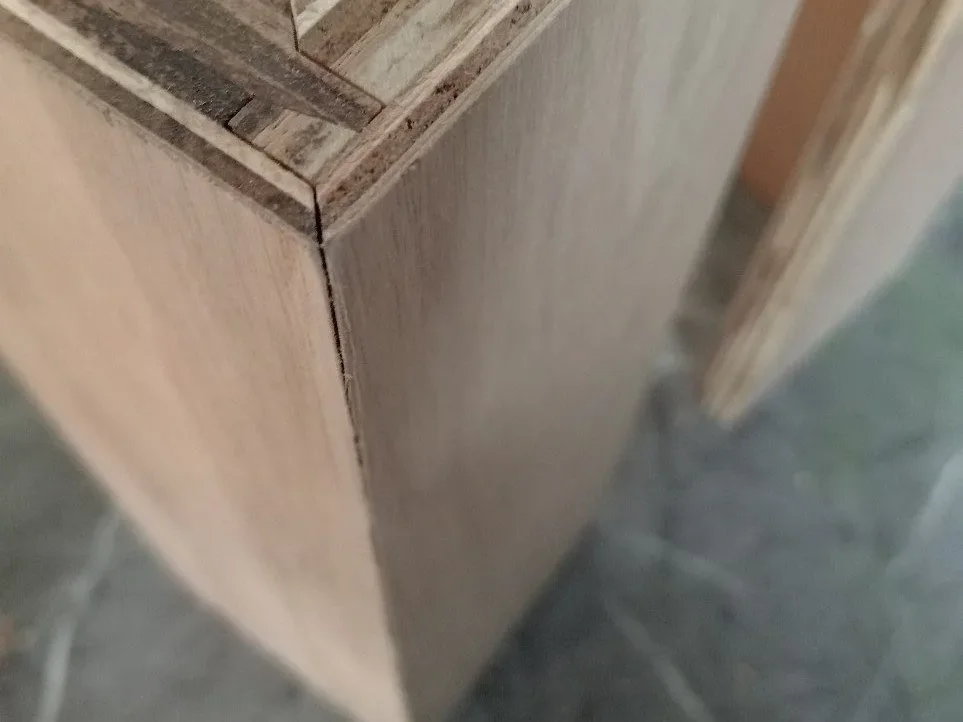
Plywood is built from thin wood veneers glued in layers with the grain crossed. This cross-grain structure gives high strength for its weight, good screw holding and stable dimensions.
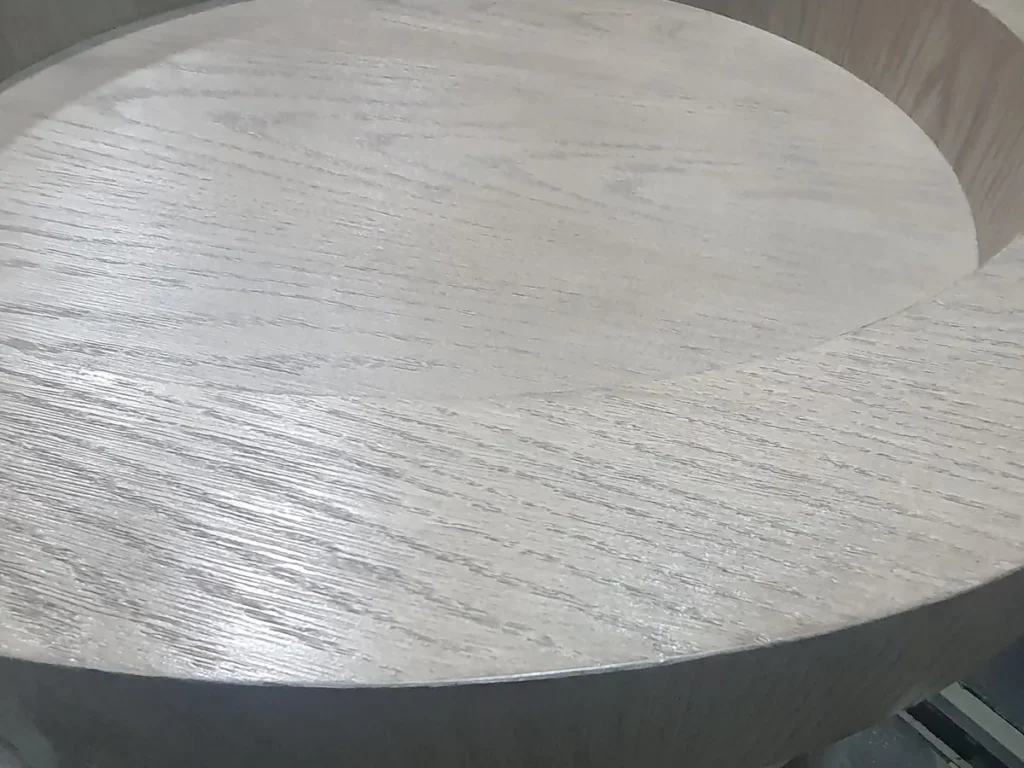
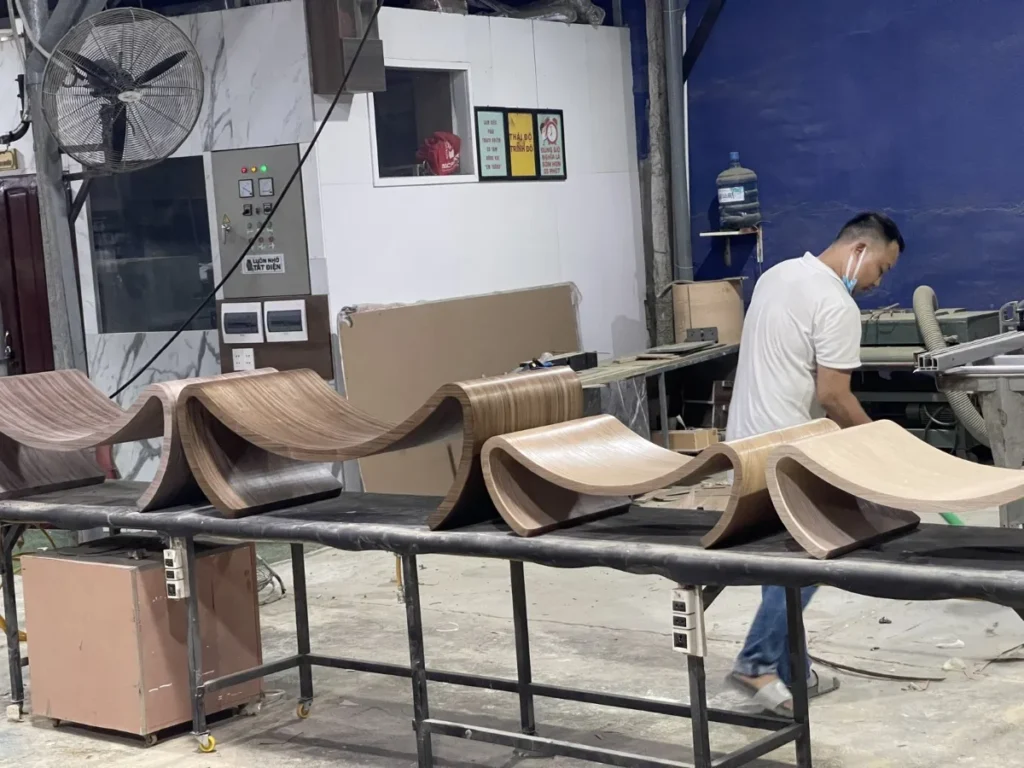
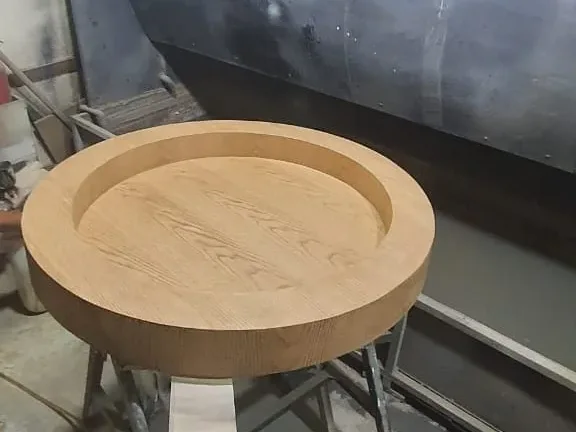
Plywood can also be bent into curves, which is why we use it for shaped pet bed shells. It takes veneer, paint or laminate well, but usually costs more than MDF of the same thickness. Best uses: load-bearing frames, shelves and bases; curved parts; products that are assembled and disassembled often; pieces that face rough handling in transit.
MDF: smooth surfaces and precise machining
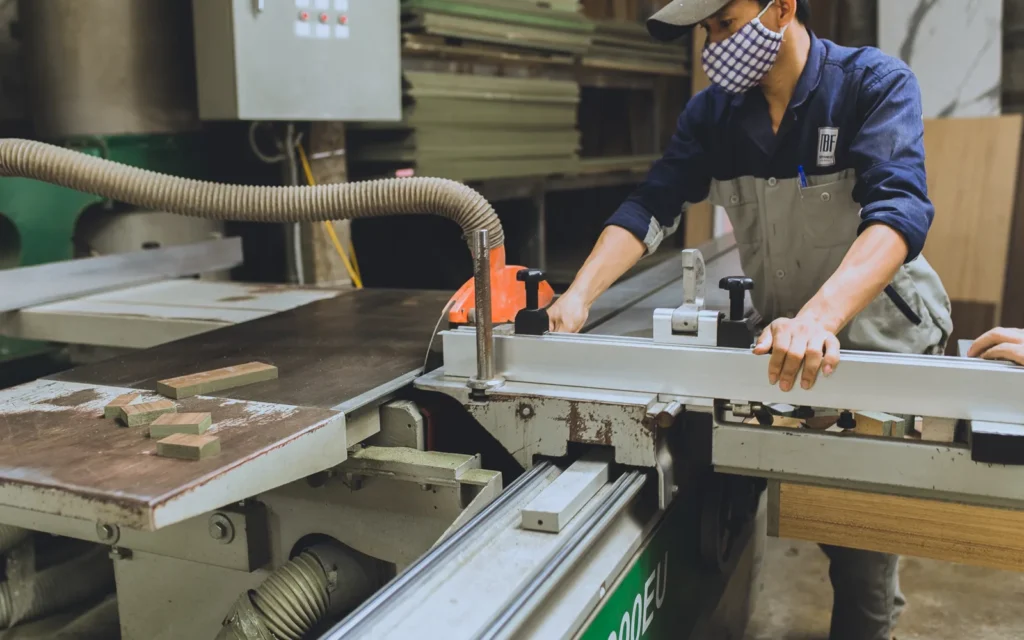
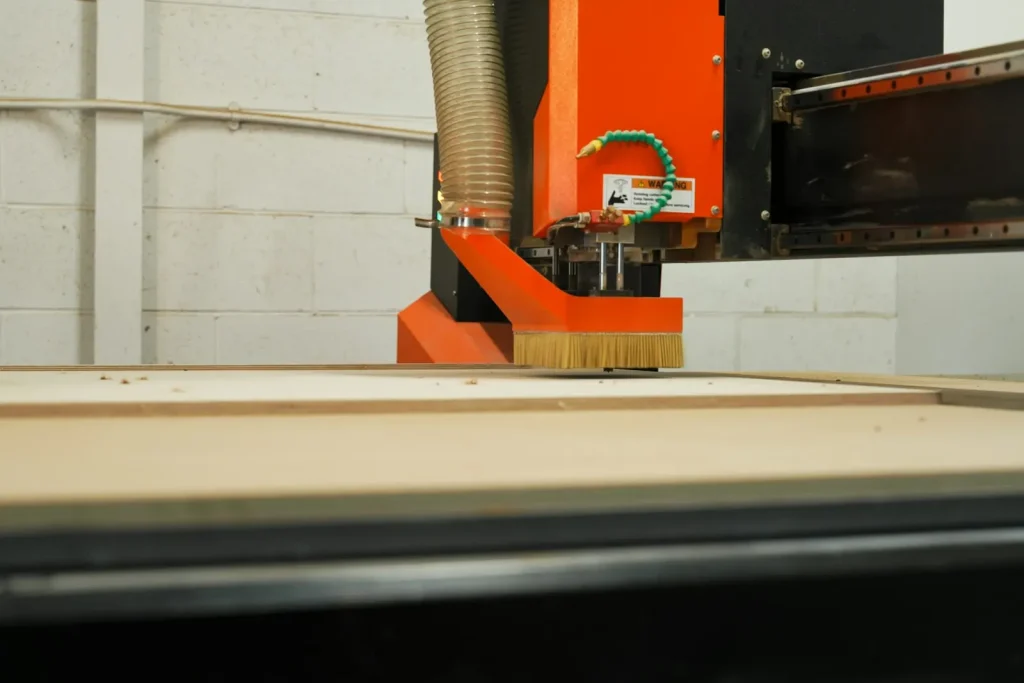
MDF is made from fine wood fibres pressed into a dense, uniform board. It has no grain and no voids, so it machines cleanly on CNC and gives a very smooth base for paint.
MDF is heavier than plywood and holds screws less well at the edges, so edges and cut-outs must be sealed carefully to limit moisture uptake. Best uses: painted doors and panels, routed patterns and decorative details, flat non-structural parts where a flawless finish matters.
Moisture: plan for humidity in transit
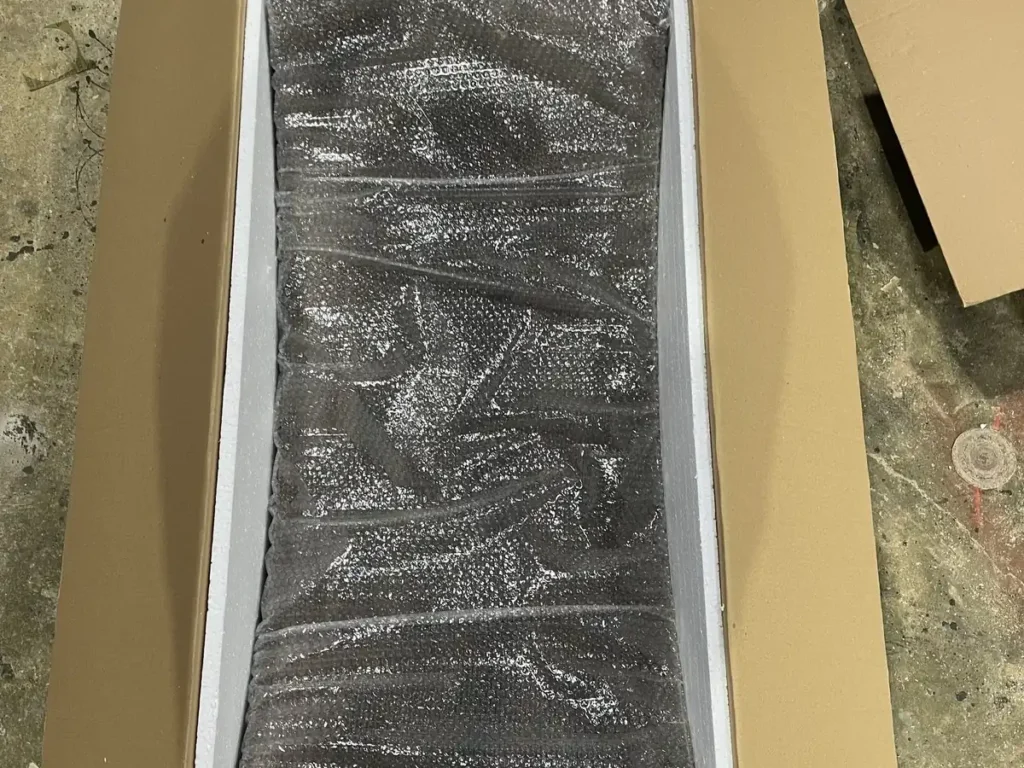
Furniture shipped from Vietnam crosses humid climates and can sit in containers for weeks. Both panels should be fully sealed on all faces and edges before packing.
For damp rooms such as bathrooms or kitchens, ask for moisture-resistant grades and design gaps that keep water off the panel.
A panel is only as durable as its weakest edge. Seal every face before it leaves the factory.
Emission rules for the US market
Engineered panels are bonded with resins that can emit formaldehyde. For US orders we use MDF and plywood from CARB Phase 2 / TSCA Title VI certified mills, and mill certificates are provided on request.
Tell us the destination market and the documents your buyers require, so we can match the panel source and paperwork to your order.
Plywood vs MDF furniture: which panel for which part
Most products combine both panels. Ask your supplier to state the panel, thickness and finish for every part on the quotation.
| Part | Suggested panel |
|---|---|
| Frames, shelves, bases | Plywood |
| Curved shells and bent parts | Plywood |
| Painted doors and panels | MDF |
| Routed decorative details | MDF |
| Damp areas | Moisture-resistant grade, fully sealed |
How we help you choose
When we review your drawings, we suggest a panel for each part based on load, shape, finish and destination market. Samples let you confirm strength and finish before mass production.
Learn more about our export and OEM manufacturing process, read our guide to sourcing OEM pet furniture from Vietnam, or see our wooden pet beds made from bent plywood.
The bottom line: use both panels, each where it performs best
Plywood and MDF are partners rather than rivals: plywood for strength, screw holding and curves; MDF for flawless painted surfaces and fine machining. In export, durability depends on sealing every face and edge, and on matching the panel source to the emission rules of the destination market.
Specify panel, thickness and finish part by part on the quotation, and confirm them on the sample.
Tam Quang Minh at a glance
- Factory
- Xuan Phu, Da Nang, Vietnam
- Founded
- 2011
- MOQ
- 50 pieces per design
- Lead time
- 30–45 days after sample approval and deposit
- Capacity
- 4–5 × 40HQ containers per month
- Terms
- FOB Da Nang · T/T 30% deposit, 70% before shipment
- Contact
- WhatsApp +84 909 126 905 · export@tamquangminh.com
Frequently asked questions: plywood vs MDF
Is plywood stronger than MDF?
For its weight, yes. Cross-grain veneers give plywood higher strength and better screw holding, which suits frames and load-bearing parts.
When is MDF the better choice?
For painted doors, routed details and flat parts where a flawless surface matters. MDF machines cleanly and gives a very smooth base for paint.
How do you protect panels from humidity in transit?
Seal every face and edge before packing, use moisture-resistant grades for damp areas, and add desiccants in the container on long voyages.
Do your panels meet US emission rules?
For US orders we use MDF and plywood from CARB Phase 2 / TSCA Title VI certified mills, and mill certificates are provided on request.
 VN
 DE