
Importing wooden furniture from Vietnam means meeting the destination market’s rules on panel emissions, product safety and timber origin. This checklist sums up what US and EU buyers usually ask a factory for, and how we prepare the paperwork before a container leaves Da Nang.
Key points
- US: plywood, MDF and particleboard must meet TSCA Title VI formaldehyde limits, and finished goods carry a TSCA label.
- US: the Lacey Act declaration lists wood species and country of harvest for furniture imports.
- US: freestanding dressers and chests must pass the STURDY Act tip-over standard.
- EU: the deforestation regulation (EUDR) applies from 30 December 2026 for large and medium operators.
- EU: since 13 December 2024 the General Product Safety Regulation requires an EU-based responsible operator and traceability details.
This guide is general information for buyers, not legal advice. Rules change; confirm the details for your product with your customs broker or a testing laboratory.
Why compliance comes first
Price, lead time and finish quality decide which factory you shortlist. Compliance decides whether the goods clear customs and stay on sale. A missing emissions label or an incomplete timber declaration can hold a container at the port, and a product that fails a safety standard can be recalled after it has been sold.
Most rules sit with the importer of record, not with the factory. The factory’s job is to choose compliant materials, keep records for each batch and hand over documents the importer can rely on. That is the part this checklist covers.
United States: what importers usually need
Formaldehyde emissions: TSCA Title VI
The US Environmental Protection Agency regulates three composite wood products: hardwood plywood, medium-density fibreboard (MDF, including thin MDF) and particleboard. Finished goods that contain them, such as cabinets, shelves and plywood pet beds, are covered too. For goods produced or imported after 22 March 2019, the label must show the fabricator’s name, the month and year of production and a TSCA Title VI compliance statement, and importers must provide an import certification.
What we do: we buy panels only from mills that state CARB Phase 2 / TSCA Title VI compliance, keep the supplier certificate for each batch and apply the finished-goods label in the format your importer specifies. Read more in our guide to plywood vs MDF for export furniture.
Timber origin: the Lacey Act declaration
The Lacey Act requires an import declaration for plant products. Its final enforcement phase, from 1 December 2024, extended the declaration to the remaining plant-product tariff codes, including furniture. The declaration lists the scientific name (genus and species), the country of harvest and the quantity of plant material.
What we do: for each item we give you a material list by component, with species and country of harvest for solid wood and veneer, based on our suppliers’ documents.
Tip-over safety: the STURDY Act
Under 16 CFR 1261, which adopts ASTM F2057-23, freestanding clothing storage units made from 1 September 2023 must pass stability tests, include an anti-tip device and carry a permanent warning label. The rule covers units at least 27 inches tall, weighing at least 30 pounds and with at least 3.2 cubic feet of enclosed storage. Shelving, office furniture and built-in units are excluded, and so is most pet furniture.
What we do: if your design falls in scope, we review drawer and door layout with you before sampling and send the golden sample to a third-party laboratory you choose.
European Union: what importers usually need
Deforestation-free supply: the EUDR
Regulation (EU) 2023/1115 on deforestation-free products covers wood and many wood products, including furniture. After two postponements, the European Commission states that large and medium operators must comply from 30 December 2026, and micro and small operators from 30 June 2027. The operator that first places the product on the EU market files a due diligence statement; downstream traders keep its reference number.
What we do: we record the supplier, species and country of harvest for every wood material in an order and pass on the origin and geolocation data our panel and timber suppliers provide, so your due diligence statement has a documented trail back to the source.
Product safety: the GPSR
The General Product Safety Regulation, (EU) 2023/988, has applied since 13 December 2024. Products sold in the EU need an economic operator established in the EU who is responsible for safety, and online offers must show the same safety information as products sold in shops.
What we do: we mark type or batch number and manufacturer details on the product or its packaging, and add the name and address of your EU responsible person to labels and instructions.
Coatings and chemicals
Buyers in the EU often ask how finishes are made. Our factory has its own paint room and uses water-based coatings. We can share coating safety data sheets and arrange third-party chemical tests if your retailer requires them.
Wood packaging: ISPM 15
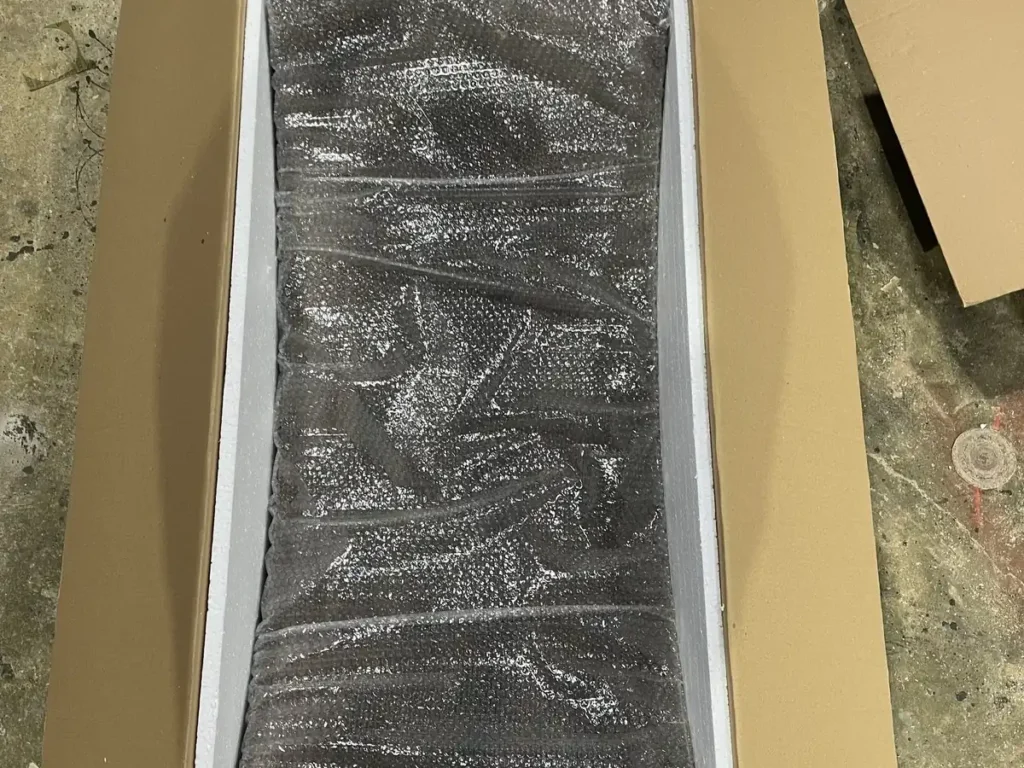
Pallets and crates made of solid wood must be heat-treated and stamped with the ISPM 15 mark for both the US and the EU. We use stamped pallets or cardboard-only packing, as agreed per order. See our guide to export packing for wooden furniture.
Documents to ask your factory for
| Document | US | EU | Who provides it |
|---|---|---|---|
| Panel emissions certificate (CARB Phase 2 / TSCA Title VI) | Yes | On request | Factory, from panel mill |
| Finished-goods TSCA label | Yes | – | Factory |
| Material list: species and country of harvest | Yes (Lacey Act) | Yes (EUDR) | Factory |
| Geolocation and due diligence data | – | Yes (EUDR) | Supply chain; filed by EU operator |
| Tip-over test report (clothing storage units) | Yes, if in scope | – | Third-party lab |
| Batch and manufacturer marking | Recommended | Yes (GPSR) | Factory |
| Coating safety data sheets | On request | On request | Factory, from coating supplier |
| ISPM 15 mark on wood packaging | Yes | Yes | Factory |
How we prepare an export order
Compliance is built into our OEM process rather than added at the end:
- Drawings and market. You tell us where the goods will be sold. We list the rules that apply and the documents you will need.
- Materials. We choose panels, timber and coatings with matching certificates and record species and origin.
- Golden sample. You approve the sample; if needed, it goes to your chosen laboratory.
- Production and QC. Each batch is labelled and checked against the approved sample.
- Packing and shipping. Export cartons, ISPM 15 packaging and a document pack go with the container from Da Nang.
Tam Quang Minh at a glance
- Factory
- Xuan Phu, Da Nang, Vietnam
- Founded
- 2011
- MOQ
- 50 pieces per design
- Lead time
- 30–45 days after sample approval and deposit
- Capacity
- 4–5 × 40HQ containers per month
- Terms
- FOB Da Nang · T/T 30% deposit, 70% before shipment
- Contact
- WhatsApp +84 909 126 905 · export@tamquangminh.com
The bottom line: ask for documents before you ask for samples
A factory that can explain which rules apply to your product, and show the certificates behind its materials, will save you time at customs and risk after sale. Tell us your destination market at the first enquiry and we will plan materials and paperwork from day one.
Frequently asked questions
Does TSCA Title VI apply to plywood pet beds?
Yes, if the bed contains hardwood plywood, MDF or particleboard and is imported into the US. The panels must come from certified mills and the finished good must carry a TSCA Title VI label with the fabricator name and month and year of production.
When does the EUDR start to apply?
According to the European Commission, large and medium operators must comply from 30 December 2026, and micro and small operators from 30 June 2027. The operator that first places the product on the EU market files the due diligence statement.
Does the STURDY Act cover every cabinet?
No. It covers freestanding clothing storage units such as dressers and chests that are at least 27 inches tall, weigh at least 30 pounds and have at least 3.2 cubic feet of enclosed storage. Shelving, office furniture and built-in units are excluded.
Which documents can Tam Quang Minh provide?
For each order we can provide a material list with wood species and country of harvest, panel supplier certificates for formaldehyde emissions, coating safety data sheets, product labels with batch and production date, packing lists and ISPM 15 marks on solid-wood packaging. Test reports from third-party labs are arranged on request.
Sources: US EPA – Formaldehyde standards for composite wood products · Livingston – Lacey Act declaration from 1 December 2024 · Intertek – STURDY Act final rule · European Commission – EUDR application dates · SGS – EU General Product Safety Regulation



 VN
 DE